
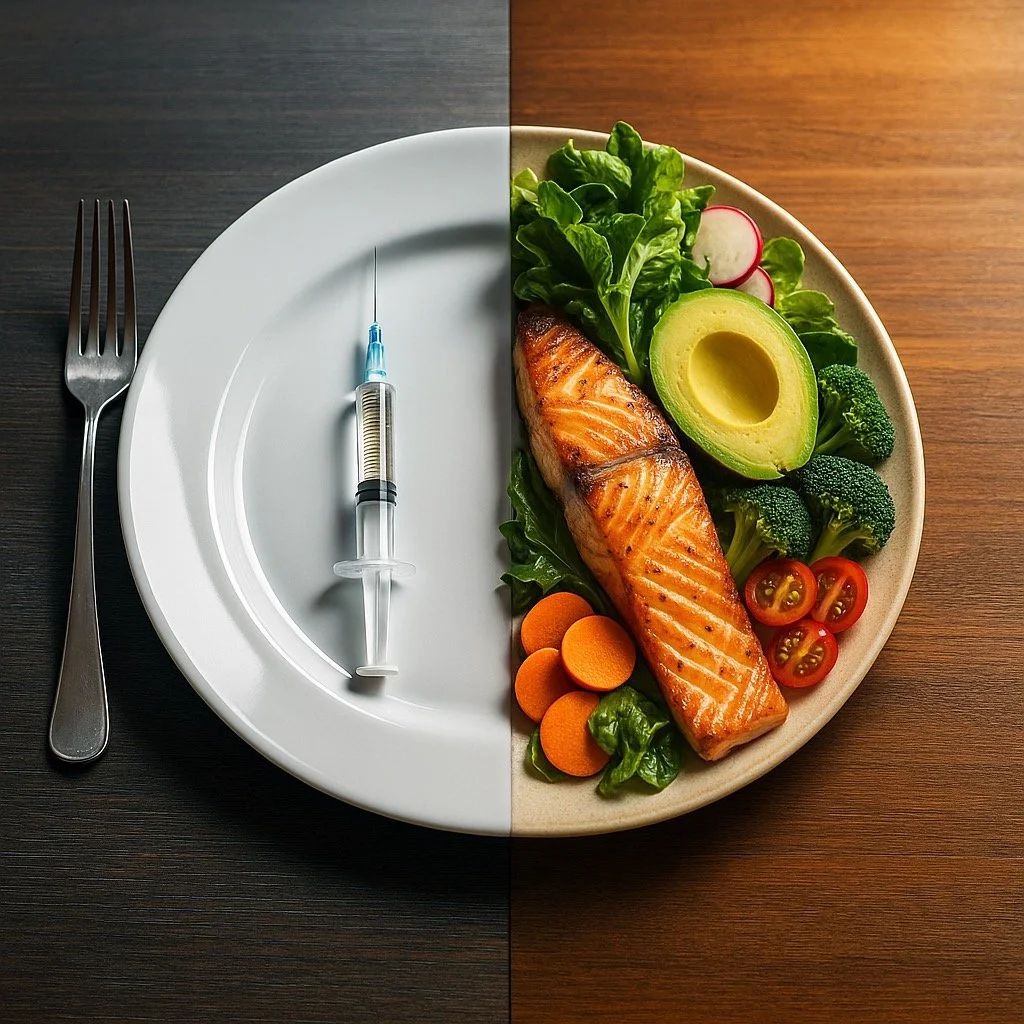
GLP-1: The Needle vs The Plate
We’ve reached the point where syringes are being served as the answer to our food problem. But what happens when the drug runs out—and the real hunger remains?
I stand for people in Asia—especially Singapore—to live young and die old.
I’m an InsulinIQ-certified metabolic health coach, trained to focus on insulin resistance as the root cause of many chronic conditions. I’m also a certified coach and a member of the International Coaching Federation (ICF).
That combination matters. Doctors provide treatment and information — but my role is different. I know the difference between knowing, understanding, and actually getting things done. My work is to help you move past fear, confusion, and emotional roadblocks, and guide them toward simple, practical steps that support recovery.
🍜 Let’s Talk Straight
The Aftermath Nobody Talks About
We’ve reached the point where the real story with GLP-1 drugs isn’t about weight loss at all. It’s about what happens when you stop.
The headlines all celebrate the dramatic before-and-after photos. But buried in the fine print of clinical trials is a quieter, less glamorous truth: the moment people come off these injections, the weight creeps back. Fast. In one study, patients who had lost a fifth of their body weight on semaglutide gained more than half of it back within a year of stopping. Another analysis showed the rebound begins in as little as two months after discontinuation.
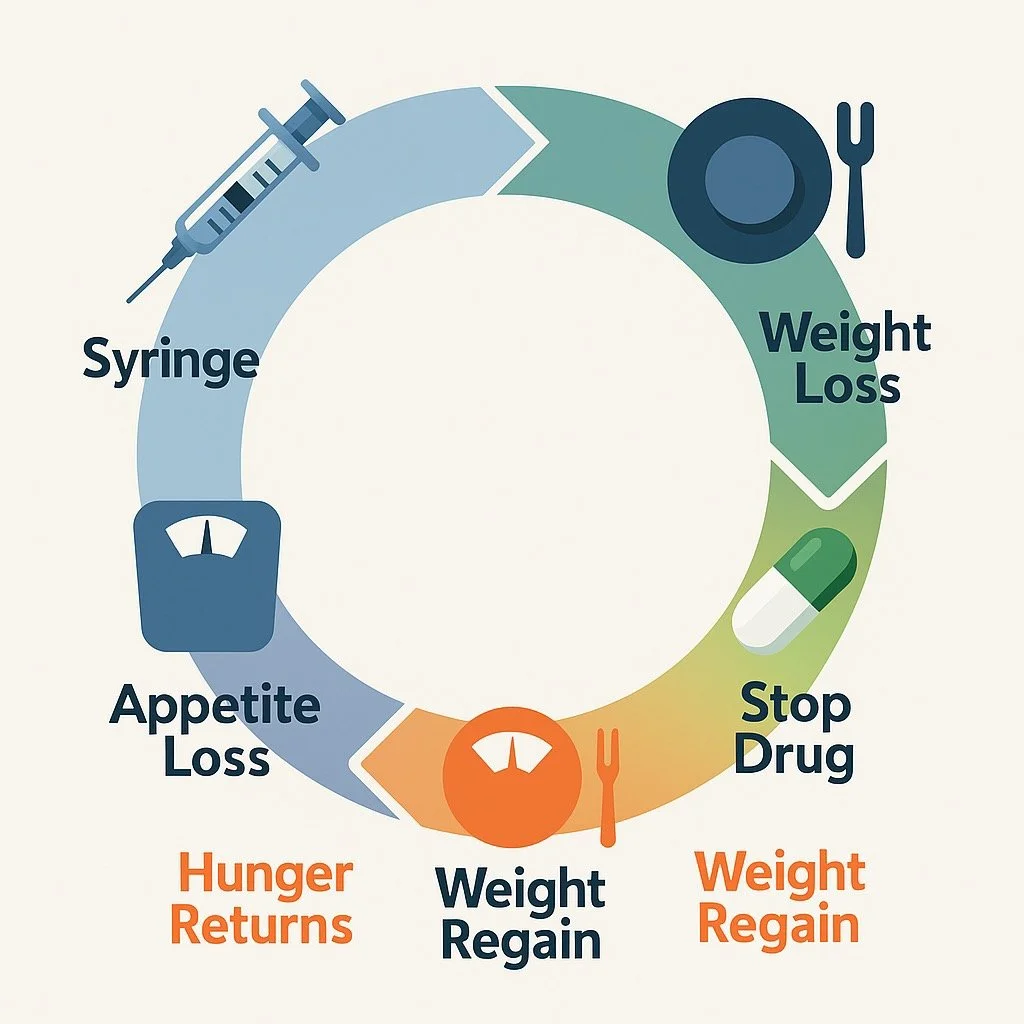
This is the loop no one likes to talk about: the cycle of injections, appetite loss, weight loss, and then, once the drug is stopped, the creeping return of hunger and weight. It’s not failure — it’s physiology. The body is wired to fight back. Which brings us to the real question: who’s pulling the strings inside your body?
Read more @ https://open.substack.com/pub/liveyoungdieold/p/glp-1-the-needle-vs-the-plate?r=18q1ts&utm_medium=ios
